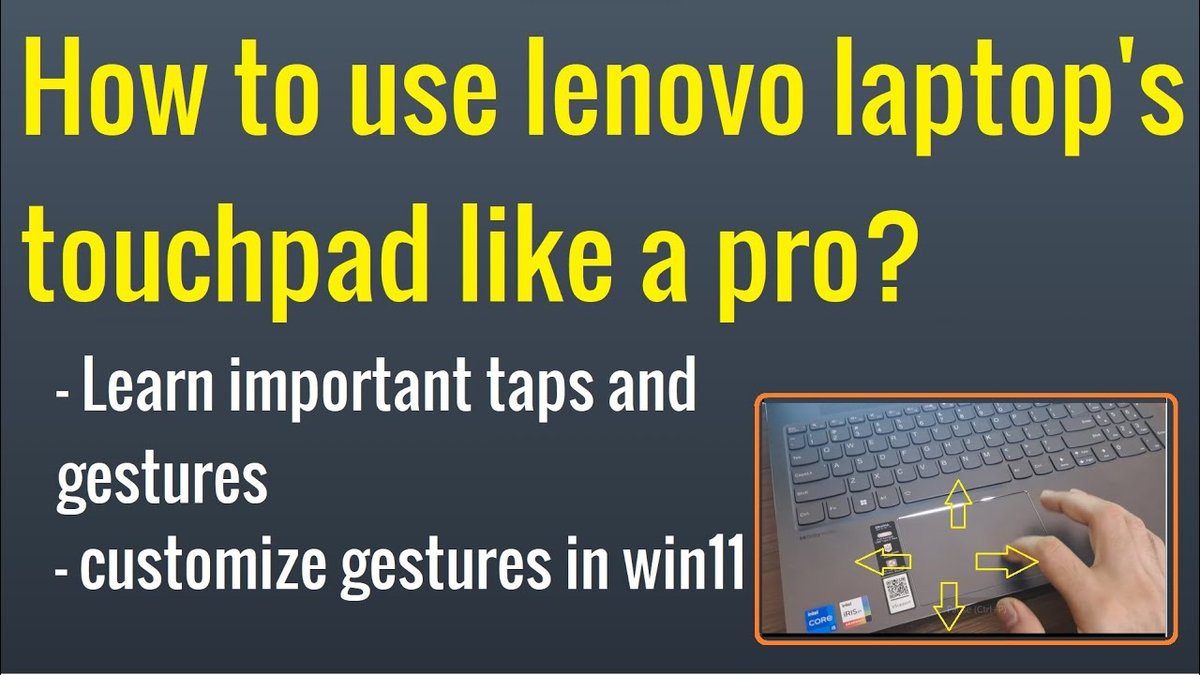
Mastering your laptop often comes down to the smallest interactions. For anyone looking to truly unlock the potential of their Windows 11 device, a deep dive into Understanding Basic Touchpad Clicks and Taps isn't just helpful — it's transformative. This isn't about memorizing complex commands; it's about building intuitive muscle memory that makes every scroll, tap, and swipe feel like a natural extension of your thoughts.
Windows 11, with its emphasis on intuitive touch and gesture-based inputs, makes interacting with your device more fluid than ever before. Whether you're navigating documents, browsing the web, or managing multiple applications, a well-understood touchpad is your personal command center.
At a Glance: Key Takeaways for Touchpad Mastery
- One-Finger Taps are Your Clicks: A light tap acts as a left-click; a quick double-tap opens items.
- Two Fingers Unlock Scrolling & Zooming: Easily navigate pages and adjust content size.
- Three and Four Fingers are Multitasking Superpowers: Switch apps, view desktops, and access quick settings.
- Customization is Key: Tailor gestures in Windows Settings to fit your unique workflow.
- Practice Builds Proficiency: The more you use them, the more natural these gestures become.
- Keep Drivers Updated: Ensure optimal performance and access to the latest features.
The Unsung Hero: Your Touchpad and the Power of Precision
Think of your touchpad as more than just a substitute for a mouse; it's a sophisticated input device designed for efficiency and a more tactile experience. Windows 11, especially when paired with a "precision touchpad" (a standard feature on most modern laptops), leverages this hardware to its fullest. These touchpads are engineered to recognize subtle movements and multi-finger gestures with incredible accuracy, turning simple taps and swipes into powerful commands.
While this guide focuses on the touchpad, it’s worth noting that the underlying philosophy for input in Windows 11 extends to touchscreens as well. Many of the gestures you'll learn here, like tapping or pinching to zoom, have direct parallels if your laptop also boasts a touchscreen. The goal is a seamless, intuitive interaction, no matter how you choose to interface with your digital world.
Getting Started: The Essential One-Finger Moves
Every great journey begins with a single step, and for touchpad mastery, that step is the humble one-finger gesture. These are the building blocks of interaction, mimicking the most common mouse actions.
Tap: The Foundation of Interaction
This is your go-to move for selecting things, clicking buttons, and interacting with almost any element on your screen.
- How to Do It: Lightly touch the touchpad surface with one finger, then lift it. It’s quick, subtle, and requires minimal pressure.
- What It Does:
- Selects an item: Highlight a file, folder, or piece of text.
- Activates a button: Click "OK," "Cancel," or a link on a webpage.
- Opens an app from the Taskbar: A single tap is all it takes.
- Think of it as: Your left-mouse click. It's the most fundamental way to tell your computer, "Yes, this one!"
Double Tap: Opening Doors with a Quick Rhythm
Just like a double-click with a mouse, the double-tap gesture is your key to launching applications and opening files.
- How to Do It: Tap twice rapidly with one finger, keeping the taps close together in time.
- What It Does:
- Opens a file or folder: Launch that document or explore a directory.
- Starts an application: Fire up your browser or word processor from the desktop or Start menu.
- Selects a word: In many text editors, a quick double-tap on a word will highlight it.
- Think of it as: The "Execute" command. It's how you tell your computer to do something with the selected item.
Tap and Hold (Long Press): Uncovering Hidden Options
Sometimes, you need more than just a simple click. The tap and hold gesture is the equivalent of a right-click, revealing context-sensitive menus and secondary options.
- How to Do It: Place one finger on the touchpad, press gently, and hold it there for about 1-2 seconds. You might feel a slight haptic feedback or see a visual cue on screen.
- What It Does:
- Opens a context menu: Provides options like "Copy," "Paste," "Rename," "Delete," or "Open with..." for files and folders.
- Invokes secondary functions: Depending on the app, this might bring up additional tools or settings.
- Think of it as: Asking for "More Options." It’s how you access the deeper functionality behind an icon or file.
Click and Drag: Moving and Selecting with Ease
This gesture combines a tap with movement, allowing you to manipulate elements on your screen or select blocks of text.
- How to Do It: Tap once with one finger, but before lifting, keep your finger pressed down and slide it across the touchpad. You can then lift your finger to release.
- What It Does:
- Moves windows or icons: Click and drag a window's title bar to reposition it on your screen, or rearrange desktop icons.
- Selects multiple items: Click and drag a box around several files or folders to select them all at once.
- Highlights text: Click at the start of a passage, hold, and drag your finger across the text to select it for copying or editing.
- Think of it as: The "Grab and Move" command. It’s essential for organizing your digital space and editing content. For those who frequently switch operating systems, understanding these core interaction models can be particularly helpful, similar to how one might learn how to left-click on a Chromebook.
Unlocking More Power: Multi-Finger Touchpad Gestures
Once you're comfortable with one-finger interactions, it's time to unleash the true power of your precision touchpad: multi-finger gestures. These actions significantly speed up navigation and multitasking, making your workflow smoother and more efficient.
Two-Finger Scroll: Navigating Worlds Vertically and Horizontally
Scrolling through long documents, webpages, or image galleries becomes second nature with two fingers.
- How to Do It: Place two fingers on the touchpad and slide them together vertically (up/down) or horizontally (left/right).
- What It Does:
- Vertical Scrolling: Moves content up or down a page. Swipe up to scroll down, swipe down to scroll up (you're moving the content, not the viewpoint).
- Horizontal Scrolling: Moves content left or right, useful for wide spreadsheets or image viewers.
- Think of it as: A digital scroll wheel, but directly on your surface. It’s incredibly intuitive for exploring content.
Pinch to Zoom: Getting Closer (or Further) with Your Content
Need to see more detail, or get a broader overview? Pinch to zoom is your friend.
- How to Do It: Place two fingers on the touchpad. To zoom in, spread your fingers apart. To zoom out, pinch your fingers together.
- What It Does:
- Magnifies or shrinks content: Works in browsers, image viewers, maps, and many documents.
- Adjusts UI scale: In some applications, it can change the size of elements on the screen.
- Think of it as: Adjusting a camera lens. It’s a natural way to control your perspective.
Three Fingers and Beyond: A Symphony of Multitasking
This is where precision touchpads truly shine, offering a rich set of gestures for managing windows, switching applications, and accessing system functions quickly. These are often customizable, adding a layer of personal efficiency.
Three-Finger Tap: Quick Access to Your Command Center
- How to Do It: Lightly tap the touchpad with three fingers simultaneously.
- What It Does: By default, this often opens the Action Center (which combines notifications and Quick Settings in Windows 11), giving you immediate access to Wi-Fi, Bluetooth, Focus Assist, and more. However, this is one of the most customizable gestures! You can set it to do many other things in Settings.
- Think of it as: Your instant access panel.
Three-Finger Swipes: Seamless App and Desktop Switching
These gestures are game-changers for anyone who juggles multiple applications or uses virtual desktops.
- Three-Finger Swipe Up:
- How to Do It: Place three fingers on the touchpad and swipe them upwards.
- What It Does: Opens Task View, showing all your open windows and virtual desktops. It's a fantastic way to get an overview of your active work.
- Three-Finger Swipe Down:
- How to Do It: Place three fingers on the touchpad and swipe them downwards.
- What It Does: Minimizes all open windows, revealing your Desktop. A quick way to clear your screen and get back to your starting point.
- Three-Finger Swipe Left or Right:
- How to Do It: Place three fingers on the touchpad and swipe them horizontally (left or right).
- What It Does: Switches between your currently open applications or moves you between virtual desktops. This is incredibly efficient for moving between different tasks or workspaces without touching the mouse or keyboard.
- Think of these as: Your personal multitasking conductor.
Four-Finger Gestures: Advanced Command & Control
Similar to three-finger gestures, four-finger swipes and taps often provide additional layers of multitasking or can be customized for specific system actions. Their exact default behavior might vary slightly depending on your device and specific Windows 11 updates, but they generally offer more options for power users.
- How to Do It: Similar to three-finger gestures, but with four fingers.
- What It Does: By default, four-finger swipes might also relate to switching between desktops or apps, similar to three-finger swipes, but often offering different variations or being available for broader customization. A four-finger tap, for instance, could be configured to open the Search function.
- Customization is Key: For both three and four-finger gestures, the true power lies in personalizing their actions within Windows Settings.
Making It Your Own: Customizing Your Touchpad Experience
The beauty of Windows 11's precision touchpad support is its flexibility. You aren't stuck with default settings; you can fine-tune almost every gesture to better suit your personal workflow. This customization can significantly enhance your comfort and efficiency.
Finding Your Touchpad Settings in Windows 11
Getting to the controls is straightforward:
- Open Windows 11 Settings. The quickest way is to press the
Windows logo key + I. - In the left sidebar, click on Bluetooth & devices.
- On the right panel, scroll down and click on Touchpad.
Here, you’ll find a comprehensive array of options to adjust your touchpad's behavior.
Fine-Tuning Basic Taps and Clicks
Within the "Touchpad" settings, expand the "Taps" section to personalize your one-finger interactions:
- Cursor Speed: Adjust how quickly your pointer moves across the screen in response to your finger. Find a speed that feels natural and precise.
- Touchpad Sensitivity: This determines how light of a touch is registered. If you find your touchpad too easily triggered or not responsive enough, tweak this setting.
- Tap Options:
- Single-finger tap for single-click: (Usually enabled by default) This is the basic tap we discussed.
- Two-finger tap for right-click: A very common and convenient setting, enabling you to get that context menu without a physical click.
- Tap twice and drag to multi-select: Another essential for selecting text or moving files without physically holding down a button.
- Press the lower-right corner of the touchpad to right-click: For those who prefer a more traditional mouse-button feel.
Personalizing Multi-Finger Swipes and Taps
Scroll down further in the Touchpad settings to the "Scroll & zoom" and "Three-finger gestures" / "Four-finger gestures" sections.
- Scrolling Motion: Choose the direction your content scrolls. Most people prefer "Reverse direction" where swiping up scrolls down the page (like pulling paper up), which is the default.
- Pinch to zoom: Ensure this is enabled for the two-finger zoom functionality.
- Three-Finger Gestures: You can choose default actions for the tap and swipe gestures. Options typically include:
- Switch apps and show desktop (default for swipes)
- Change audio and volume
- Change speed and volume
- Do nothing
- For the three-finger tap, common options include Open Action Center (default) or Open Search.
- Four-Finger Gestures: Similar to three-finger gestures, you have options for taps and swipes. These often mirror the three-finger options, allowing for alternative access or additional functions.
- Advanced gestures: Clicking this option might reveal even more granular control or further customization possibilities for very specific actions, depending on your device.
Diving Deeper: More Touchpad Options
At the very bottom of the "Touchpad" settings, you might find a link for "More touchpad options." This often opens a legacy control panel window, giving you access to even older, more specific settings, including driver-level configurations for some devices. While less visually integrated with Windows 11, it can be useful for advanced troubleshooting or unique hardware configurations.
Troubleshooting Common Touchpad Woes
Even the most intuitive tech can sometimes hit a snag. If your touchpad isn't behaving as expected, don't fret. A few common troubleshooting steps can often resolve the issue quickly.
When Your Touchpad Acts Up: A Quick Checklist
- Restart Your Device: The age-old advice still holds true. A simple reboot can often clear temporary glitches.
- Check Physical Connection (External Touchpads): If you're using an external touchpad, ensure it's properly plugged in.
- Confirm Touchpad is Enabled: Some laptops have a function key (often
Fn + FxwhereFxis one of the F-keys) to enable/disable the touchpad. Accidentally pressing this is a common culprit. - Review Touchpad Settings: Double-check the settings we just covered (Settings > Bluetooth & devices > Touchpad). Ensure 'Tap gestures' and multi-finger gestures are enabled as you prefer.
- Clean Your Touchpad: Dirt, oil, or debris can interfere with sensitivity. A quick wipe with a clean, damp (not wet) cloth can sometimes work wonders.
Keeping Things Smooth: Updates and Maintenance
- Update Your Drivers: Outdated or corrupted touchpad drivers are a frequent cause of erratic behavior.
- Press
Windows key + Xand selectDevice Manager. - Expand "Mice and other pointing devices" or "Human Interface Devices."
- Right-click on your touchpad device (often named "HID-compliant touchpad" or specific to your manufacturer like "Synaptics" or "Elan").
- Select
Update driverand thenSearch automatically for updated driver software. - If that doesn't work, visit your laptop manufacturer's website and download the latest touchpad drivers directly for your specific model.
- Windows Updates: Ensure your Windows 11 operating system is fully updated. Microsoft frequently releases patches and improvements that can affect hardware performance, including touchpads. Go to
Settings > Windows Updateand check for updates.
Beyond the Basics: Tips for a Masterful Touchpad Experience
True touchpad mastery isn't just about knowing the gestures; it's about integrating them seamlessly into your daily computer use. Here are some tips to elevate your experience from functional to fluid.
Practice Makes Perfect
This might sound obvious, but regular use of gestures is the fastest way to build muscle memory. Make a conscious effort to use two-finger scrolling instead of dragging scroll bars, or three-finger swipes to switch apps instead of the taskbar. The more you practice, the more intuitive these actions will become, and the less you'll have to think about them.
Sensitivity and Calibration: Finding Your Sweet Spot
As discussed in the customization section, playing with cursor speed and touchpad sensitivity is crucial. What feels right for one person might be frustrating for another. Take the time to experiment. If your cursor jumps around, lower the sensitivity. If you have to press too hard for a tap to register, increase it. Similarly, if your touchscreen is not responding as expected, ensure it is calibrated (usually found in Settings > Devices > Touch input or through specific manufacturer tools).
Tailoring Gestures to Your Workflow
Don't just stick with the defaults if they don't quite fit. Are you a heavy media user? Perhaps configure a three-finger swipe to "Change audio and volume." Do you constantly switch between two specific applications? Use a custom three-finger gesture to cycle between them. The more your touchpad responds to your specific needs, the more productive you'll be. This proactive customization is a hallmark of efficient computer use, extending even to the granular controls like how to scroll down with a keyboard for those moments when a mouse or touchpad isn't an option.
Staying Current
Keep your Windows 11 operating system and device drivers updated. Manufacturers and Microsoft are constantly refining these gesture interactions, adding new capabilities, improving responsiveness, and fixing bugs. Staying updated ensures you benefit from the latest enhancements and maintain optimal performance.
Accessibility and Security: Thoughtful Interactions
Windows 11 thoughtfully incorporates accessibility features that extend to touchpad and touch input. Through the Accessibility settings, you can often assign custom actions to gestures, modify sensitivity, and adjust visual or auditory feedback to suit diverse needs. This ensures that everyone can interact with their device effectively.
From a security standpoint, while touchpad gestures themselves pose minimal direct risk, it's crucial to be mindful of the features they invoke. Using trusted user accounts for customization, keeping your drivers and firmware updated, and being aware of any unusual behavior are fundamental practices. These steps help prevent vulnerabilities and ensure your system remains secure.
The Future Is in Your Fingers: What's Next for Touchpads
The evolution of touchpad and touch interaction is far from over. We can anticipate even more sophisticated multi-finger gestures, potentially involving more nuanced pressure sensitivity or even haptic feedback that simulates textures. AI-driven context-aware gesture recognition could allow your touchpad to anticipate your needs based on the application you're using, offering tailored shortcuts. Furthermore, expect broader integration with third-party applications, making gestures a universal language for navigating and interacting across your digital ecosystem. Your touchpad isn't just a surface; it's a window into an ever-smarter way of computing.
Your Journey to Touchpad Mastery Begins Now
You now have the fundamental knowledge and practical steps to transform your interaction with Windows 11. From the simplest tap to the most advanced multi-finger swipe, understanding and customizing these gestures empowers you with a more intuitive, efficient, and enjoyable computing experience. Start practicing, personalize your settings, and watch as your touchpad becomes a seamless extension of your will. The digital world is literally at your fingertips.